
Exhumation & Burial: Fixing Insufficient Proof of Relationship | HAD Statutory Declaration Guide
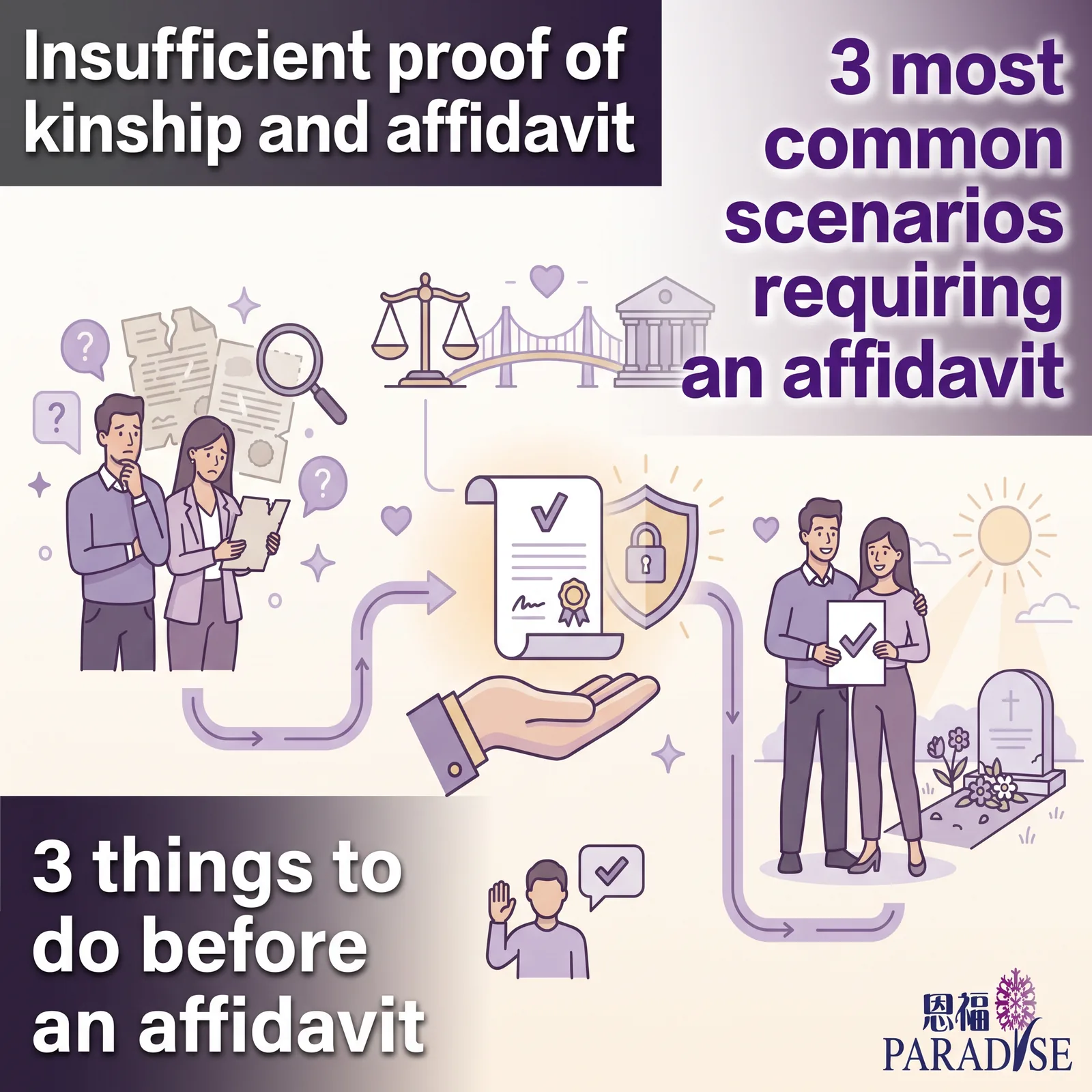
When handling exhumation or burial, families often face insufficient proof of kinship because documents have been lost. If a birth certificate cannot be produced, next of kin can usually remedy this by making a statutory declaration at the Home Affairs Department (HAD). This article outlines three common application difficulties and three preparation steps before you attend — including drafting the declaration wording and checking timeline logic — to help you complete the exhumation or burial application more smoothly. If in doubt, consult a professional funeral team to ensure the process stays compliant.
In which application scenarios does "insufficient proof of kinship" most commonly arise?
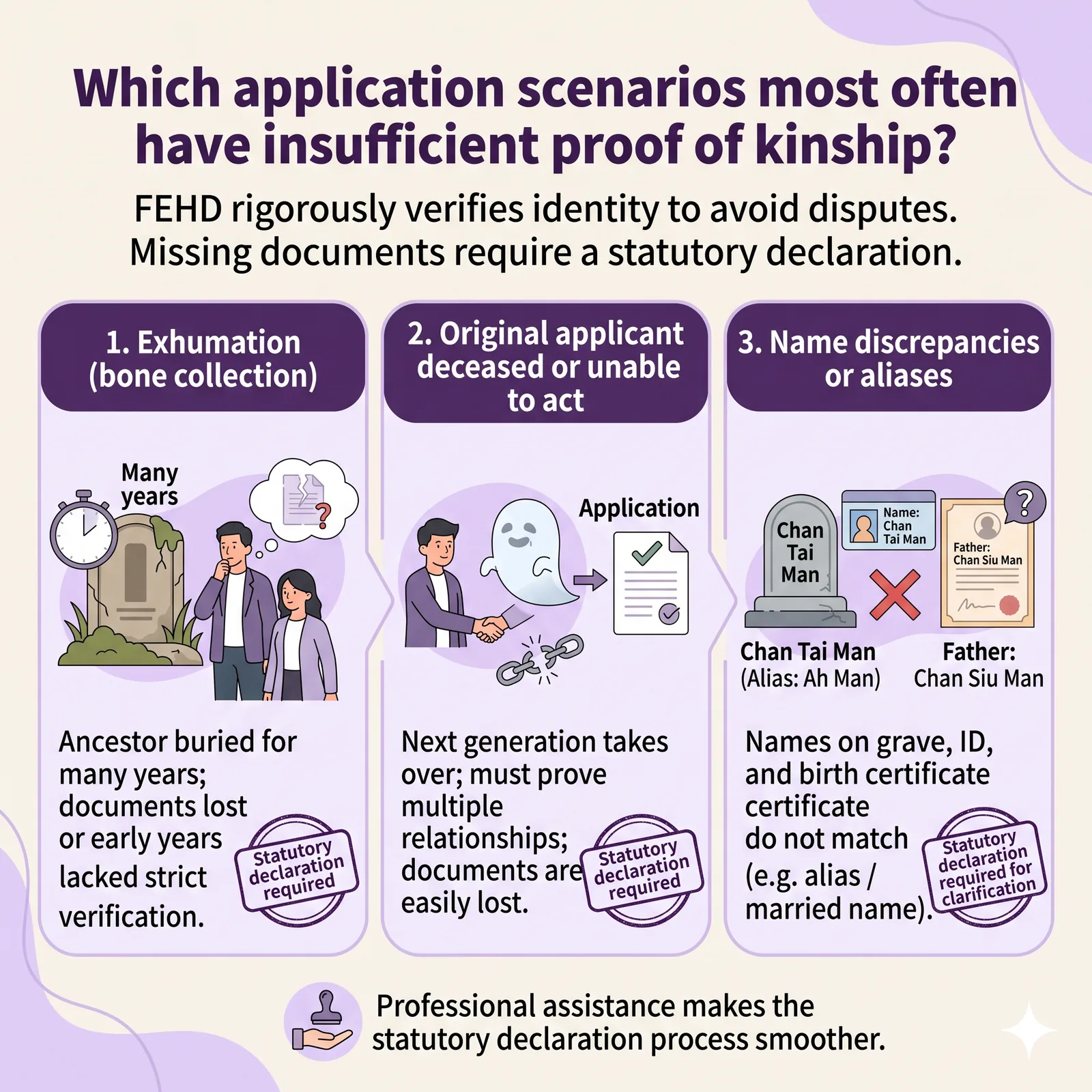
To prevent future cemetery disputes, the Food and Environmental Hygiene Department (FEHD) conducts relatively strict identity checks. In the following three situations, next of kin often need to make a statutory declaration at the Home Affairs Department to remedy missing or incomplete supporting documents:
Exhumation: The deceased was buried many years ago (usually 6+ years), and documents from that time may have been lost, or official birth certificates may not have been issued in earlier years, making it difficult for next of kin to provide valid proof of kinship based on documents alone.
The original applicant has passed away or is unable to act: The elder who handled the burial at the time has passed away, and the next generation now takes over the exhumation procedures. The new applicant must prove both their relationship with the deceased and their relationship with the original applicant; supporting documents for such multi-layered relationships are most prone to gaps.
Name mismatch or use of alias: The name on the deceased's tombstone and ID card differs from the name in the parents' column on the next of kin's birth certificate (for example, because of an alias or a married surname). Authorities treat this as a data mismatch and will ask you to clarify in a declaration that both names refer to the same person.
Three things to do before you make a declaration (to reduce back-and-forth trips)
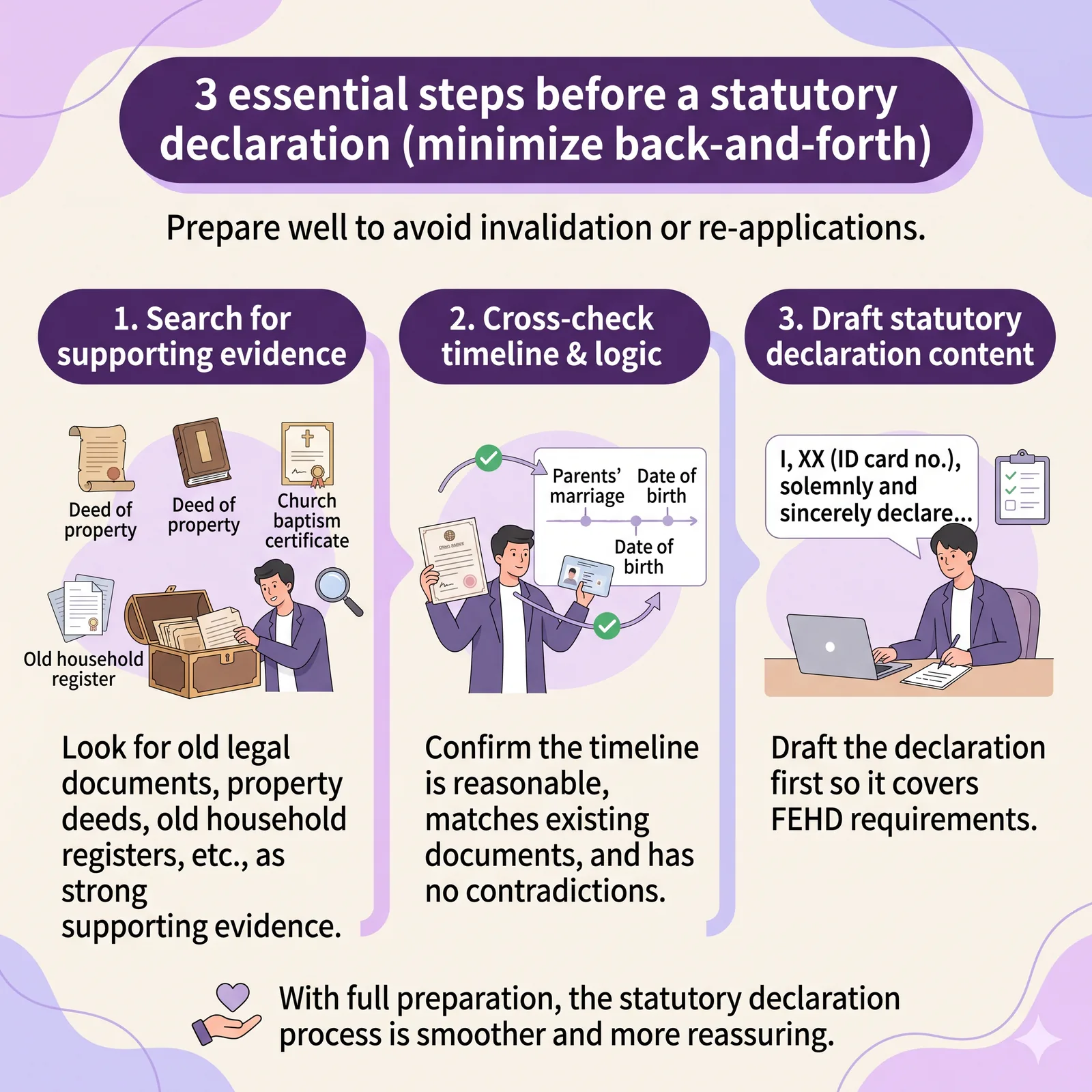
Before you go to the Home Affairs Department to make a declaration, completing the following three steps first can lower the risk of the declaration being rejected or of having to return for supplementary information:
Search thoroughly for "supporting evidence"
Besides the birth certificate, try to find old legal documents, title deeds, old-style household registers, church baptismal certificates, and similar records. These may not serve as official proof on their own, but they can strongly support what you declare and make your statement more persuasive.
Verify timeline and logic
Check that the timeline in your draft declaration is reasonable. For example, the parents' marriage year and your birth year should match existing documents (such as your ID card), so obvious contradictions do not weaken the FEHD application.
Draft the declaration wording
Do not attend the appointment unprepared. Draft the wording beforehand, for example: "I, XX (ID number), solemnly and sincerely declare that I am the biological son/daughter of the deceased OO…" Make sure it covers FEHD requirements so you can read it aloud with confidence.
How to reduce risk: entrust to a dedicated coordinator
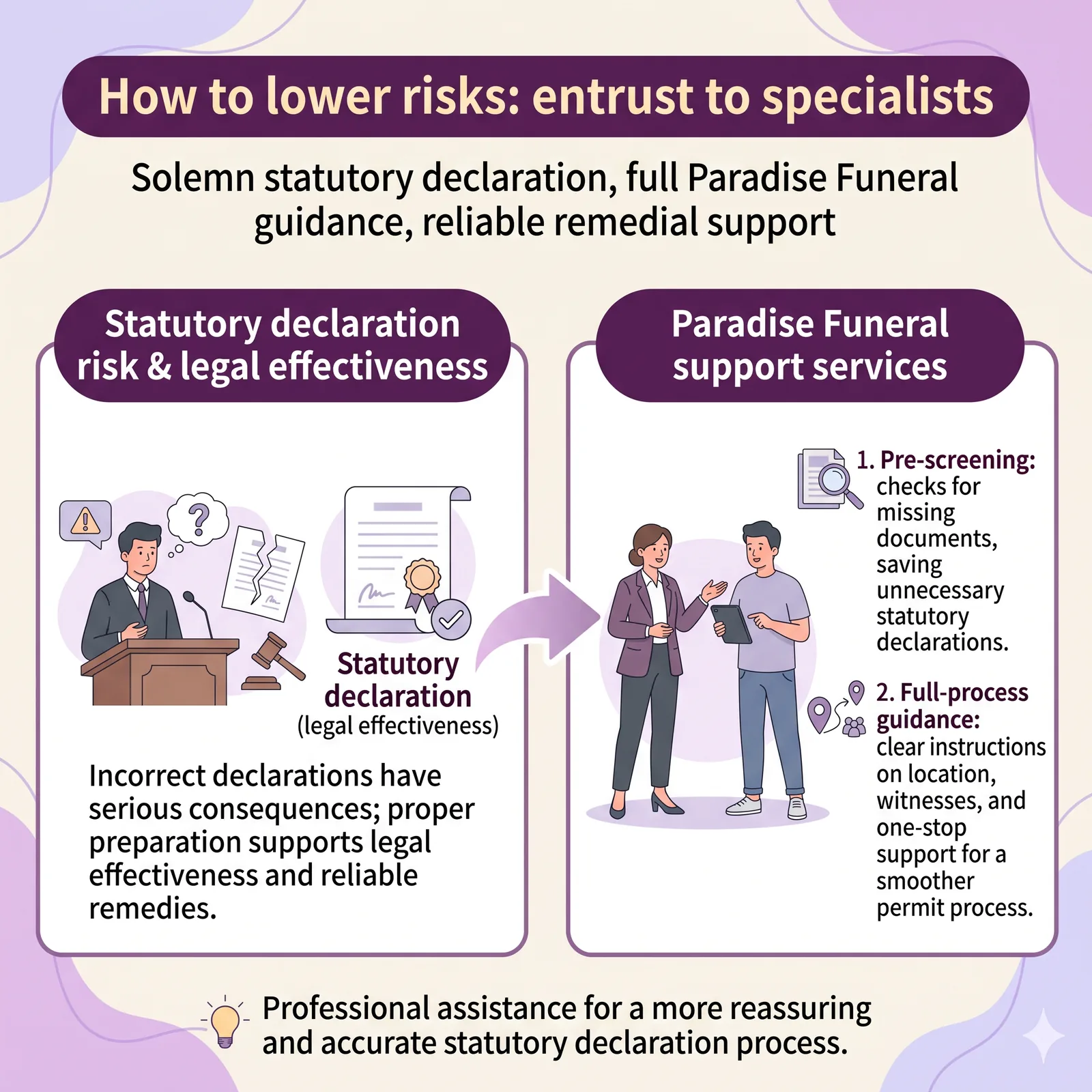
Making a statutory declaration is a solemn legal step. Errors in the wording may lead to application rejection or even legal liability. Once completed, however, the signed declaration carries legal force, and FEHD relies on it when verifying kinship. With proper preparation, it is a reliable way to remedy missing documents.
Paradise is willing to accompany you through this process and provide the following support:
Pre-review: Before next of kin go to HAD, we first check whether existing documents are truly insufficient. Sometimes a declaration is not needed, and another approach can resolve the gap first.
Full-process guidance: We clearly explain where to go, what to bring, and whether a witness is needed (if applicable), so next of kin can usually finish in one trip and obtain the exhumation or burial permit more smoothly.
Generally, you can make a statutory declaration at a Home Affairs Enquiry Centre under the Home Affairs Department, or before a lawyer. Booking ahead is recommended to avoid long queues. After you have signed the declaration, submit it to FEHD or your funeral company so they can continue the exhumation arrangements and help the family keep the schedule.
Conclusion:
On this difficult journey, missing documents should not stop you from showing care and respect for the deceased. With proper preparation — and professional help when needed — making a statutory declaration is a direct and reliable remedy. Paradise is willing to walk through the details with you, so you can focus more on remembrance than on paperwork alone. Laying the deceased to rest peacefully, or completing exhumation smoothly, is a fitting farewell.
FAQ
If I cannot find a birth certificate to prove my relationship with my father (the deceased), does that mean I cannot handle the exhumation for him?
Absolutely not — please rest assured. Although the government values documentary proof, it also understands that papers may be lost over time. If you make a statutory declaration at the Home Affairs Department confirming your kinship with the deceased, FEHD will generally accept the application.
Making a statutory declaration sounds serious — is the procedure complicated?
In practice, the process is fairly standard and less complicated than it sounds. Family members usually bring their ID card, prepare the declaration wording with our guidance, go to a Home Affairs Enquiry Centre in their district, and read and sign it before a commissioner for oaths. This is a common remedial step — there is no need to be overly nervous.
The elder who handled the earth burial at the time has passed away, and now I am taking over, but what should I do if the documents are incomplete?
This situation is quite common. The family may need to cover two points in one declaration: their relationship with the deceased, and why the original applicant cannot handle the matter (for example, because they have already passed away). We help organise these points so one declaration can cover the requirements and reduce the family's burden.
A message from Paradise: Missing documents should not hinder the care you wish to show the deceased. If you face insufficient proof, contact us first. We will guide you to resolve it in a lawful, practical way — often by making a statutory declaration — so after-death arrangements can proceed on schedule.
For any needs or enquiries, please feel free to contact Paradise. Our team will always be your strongest support!

Comments